

Cookies on this website
We use necessary cookies to run this website. With your permission we also use analytics cookies to understand how the site is used, and marketing cookies to measure our advertising. Privacy and cookies

Accredited ISO 22000 certification that demonstrates control of food safety hazards across your operations, recognised by retailers, hotel groups, airlines and export markets.

Accredited by EGAC, the Egyptian Accreditation Council
Management System Certification · ISO/IEC 17021-1
ISO 9001, ISO 14001, ISO 45001, ISO/IEC 27001, ISO 22000, ISO 50001 and ISO 21001, audited in accordance with ISO/IEC 17021-1 and the applicable sector rules: ISO/IEC 17021-2, ISO/IEC 17021-3, ISO/IEC 17021-10, ISO 22003-1, ISO 50003 and ISO/IEC 27006-1.
Accreditation details

Schedule number to be added
ISO 22000 specifies the requirements for a food safety management system. It combines interactive communication, system management, prerequisite programmes and the HACCP principles to ensure that food is safe at the point of consumption.
It applies to any organisation in the food chain, from primary production and processing to catering, storage, transport, retail and the supply of packaging. Certification confirms that hazards are identified and controlled and that the system is effective in practice.
Accredited certification is independent evidence that your management system conforms to the standard and is effective in practice.
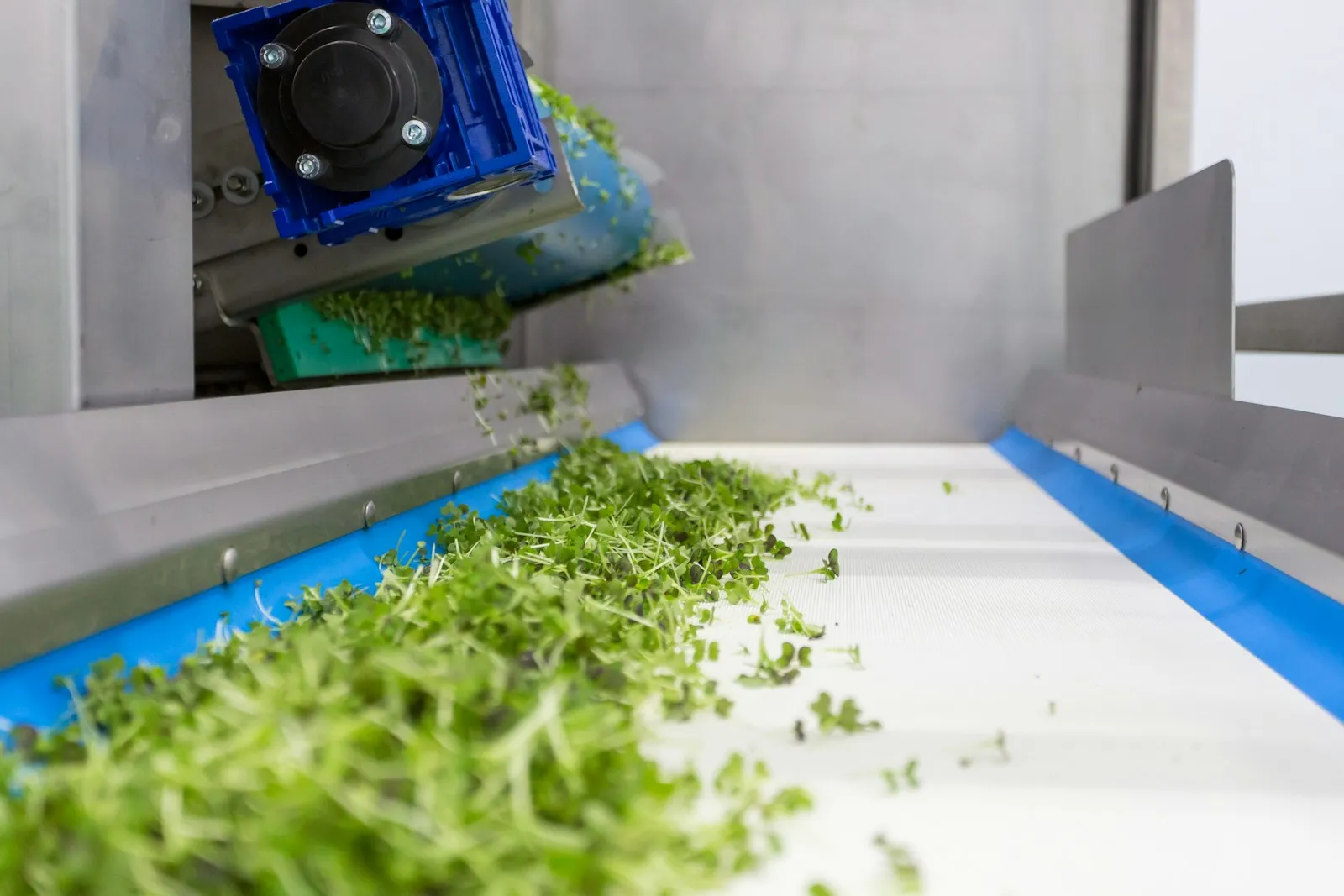
The outcomes organisations most commonly seek from certification.
The standard applies to organisations of any size and sector. Certification is particularly valuable if you:
Answer six questions to assess your readiness for the certification audit.
Questions left:
Ready for the certification audit
Your system covers the elements auditors examine first. The next step is to request a quotation and schedule the Stage 1 audit.
Request a QuotationApproaching readiness
You have a sound basis. Complete the open points and build records of operation, then request a quotation and a proposed timeline.
Request a Quotation and TimelineEarly stage
Your system is at an early stage. An advisor can explain the certification process and a realistic timeline.
Speak to an AdvisorThe requirements are set out in clauses 4 to 10, following the Plan, Do, Check, Act cycle. Auditors will expect to see the following documented information.
Key documented information
Each stage is planned and confirmed with you in advance.
You provide details of your scope, personnel and sites. We determine the audit time and issue a fixed quotation and certification agreement.
You: complete a short application. We: respond within one business day.
The audit team reviews your documented information, site conditions and readiness, and confirms the plan for Stage 2.
You: provide your documentation. We: report any areas of concern.
The audit team evaluates on site how effectively the management system is implemented.
You: host the audit. We: present findings at the closing meeting.
A competent reviewer, independent of the audit team, reviews the audit and makes the certification decision.
You: address any nonconformities. We: issue your certificate.
The fee is determined mainly by audit time, which is calculated in accordance with IAF MD 5 from the number of personnel, the number of sites and the complexity of your activities. This approach keeps fees consistent and comparable.
The full cost of the cycle, confirmed before you commit
Stage 1 and Stage 2 audits. Issue of the certificate. Two annual surveillance audits. No undisclosed charges.
Request a Fixed QuotationISO 22000 follows the harmonised structure of ISO management system standards, so it can be audited together with other standards.
Transfer your ISO 22000 certificate to GQCL
A valid accredited certificate held with another certification body can be transferred to GQCL after a pre-transfer review, in accordance with IAF MD 2, without restarting your certification cycle.
How Transfers Work
HACCP is a method for identifying and controlling food safety hazards. ISO 22000 incorporates the HACCP principles within a complete management system, adding leadership, prerequisite programmes, communication along the food chain, verification and continual improvement.
No. FSSC 22000 is a separate scheme recognised by the Global Food Safety Initiative, which combines ISO 22000 with sector technical specifications and additional requirements. GQCL certifies to ISO 22000.
Audit time is calculated in accordance with ISO 22003-1, based on the food chain category, the number of HACCP studies, the number of personnel and the number of sites.
The certificate states the food chain category and the products or services in scope, as defined in ISO 22003-1. Confirm your category with our team so that auditors with the relevant competence can be assigned.
Prerequisite programmes and the hazard control plan must be in operation, verification records must be available, and at least one internal audit and one management review must have been completed.
Once your management system is implemented and has operated long enough to produce records, including a complete internal audit and a management review, the certification process normally takes six to ten weeks from application to certificate. Your quotation sets out the proposed timeline.
Three years from the certification decision, subject to satisfactory annual surveillance audits. A recertification audit before expiry renews the certificate for a further three years.
No. As an accredited certification body, GQCL does not provide consultancy on the management systems it certifies, as ISO/IEC 17021-1 requires. We explain the requirements and the certification process clearly, and the Stage 1 audit identifies any areas of concern before Stage 2.
Yes. Audits, meetings and audit communication can be conducted in Arabic or English, according to your preference.

Tell us about your organisation and receive a fixed quotation within one business day, without obligation.
Thank you. Your request has been received.
A certification advisor will contact you within one business day.